What is Plywood?
Discover everything about Plywood: from structure, outstanding advantages, popular types to wide applications in construction, furniture and many other industries. Find out now!
Written by
Woodland
News
Product News
Woodland
Product News
Discover everything about Plywood: from structure, outstanding advantages, popular types to wide applications in construction, furniture and many other industries. Find out now!
Plywood
Introduction to Plywood
What is Plywood?
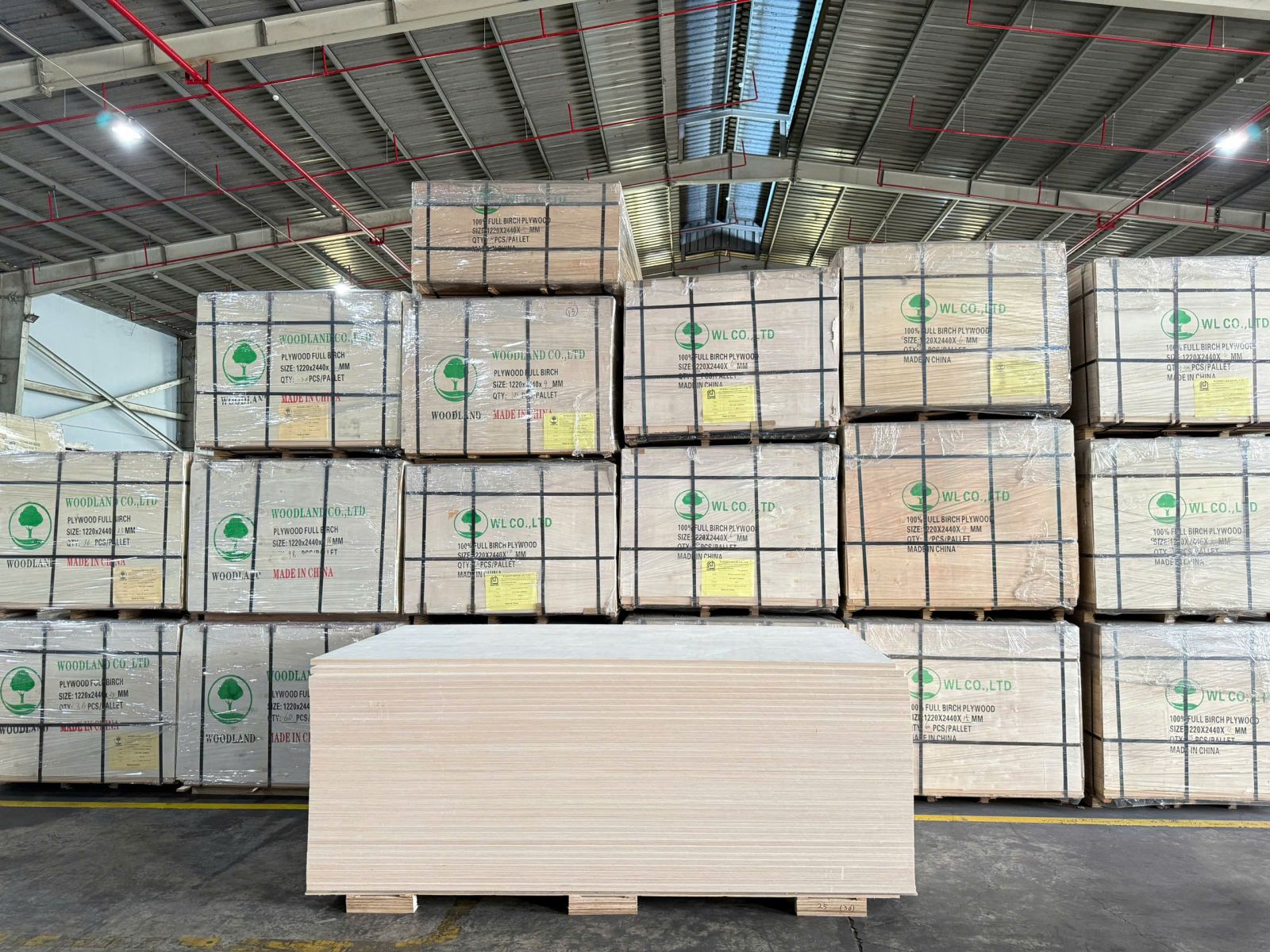
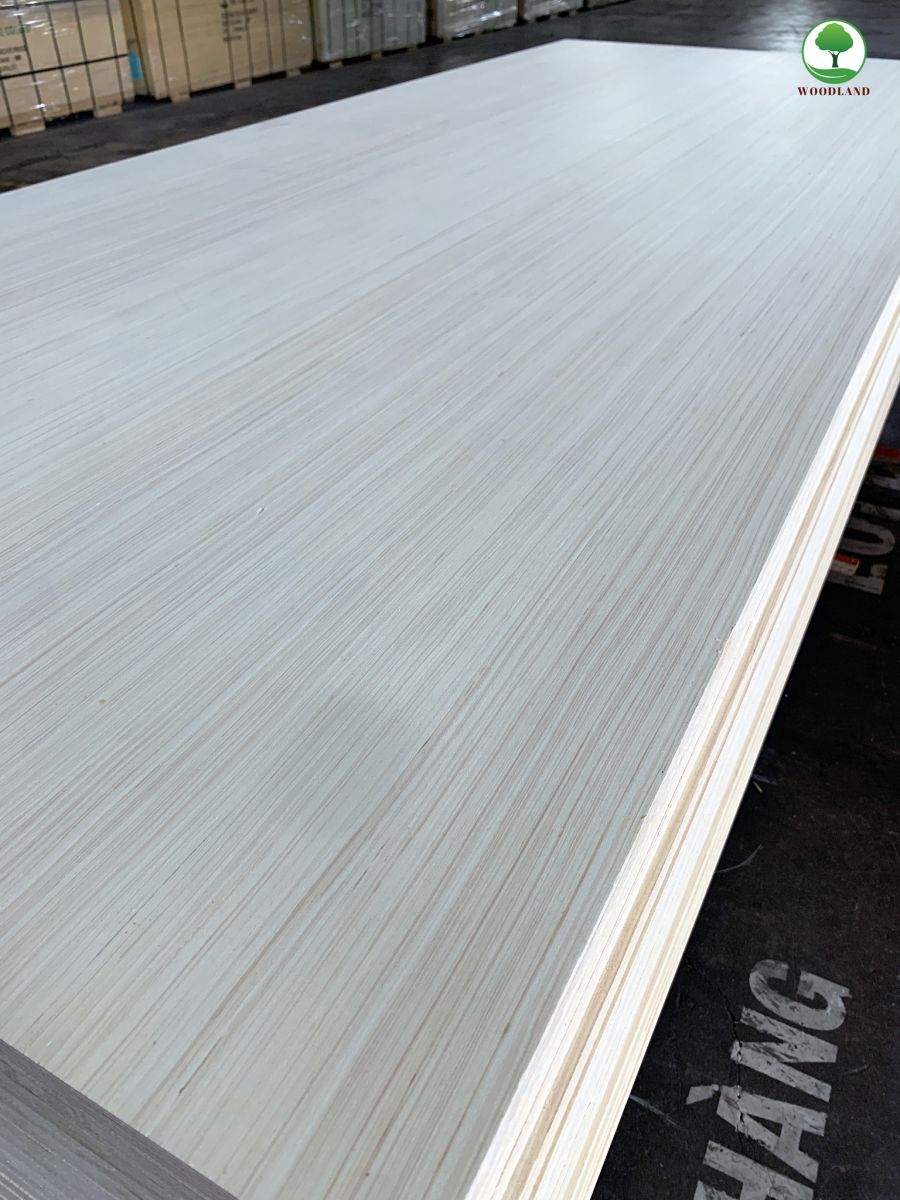
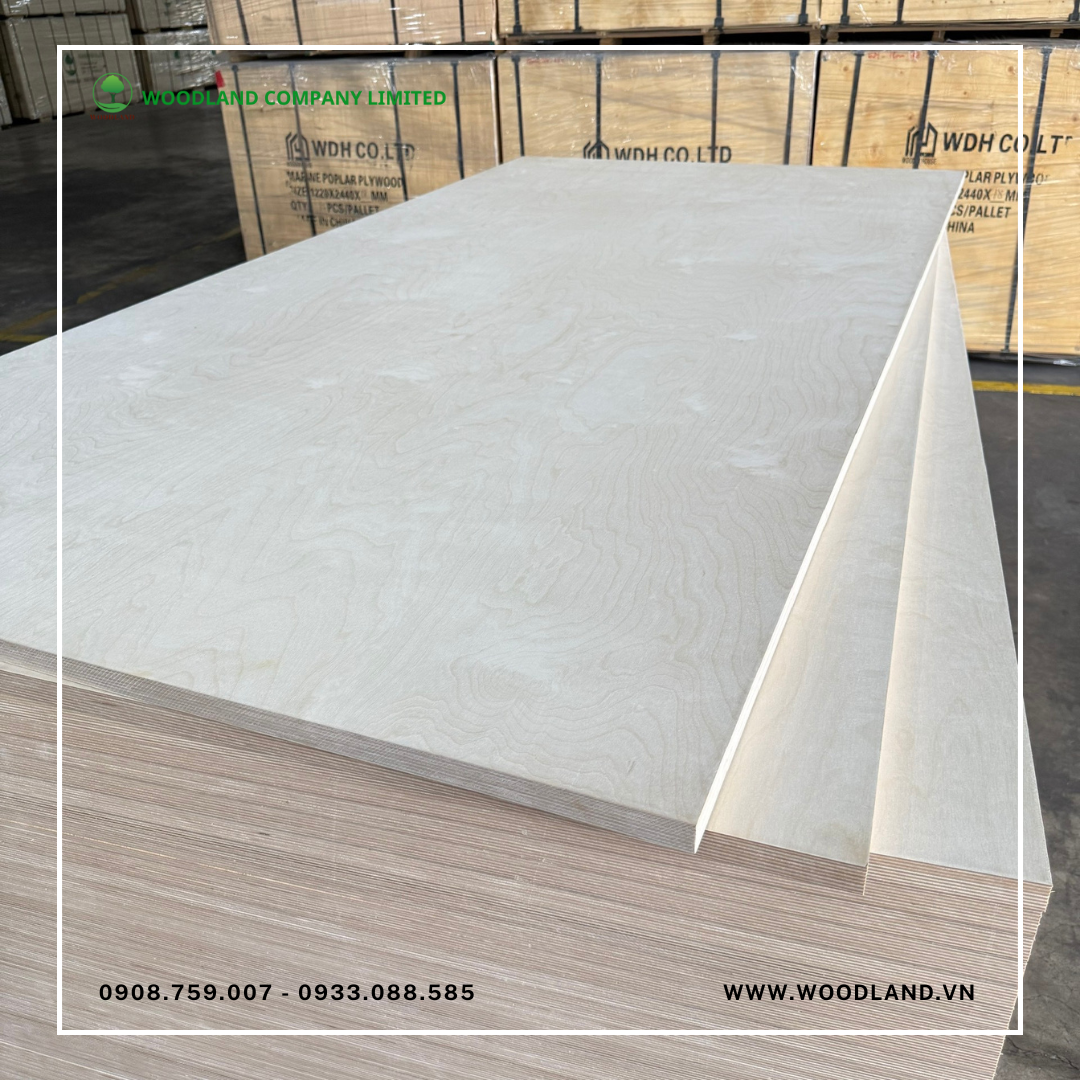
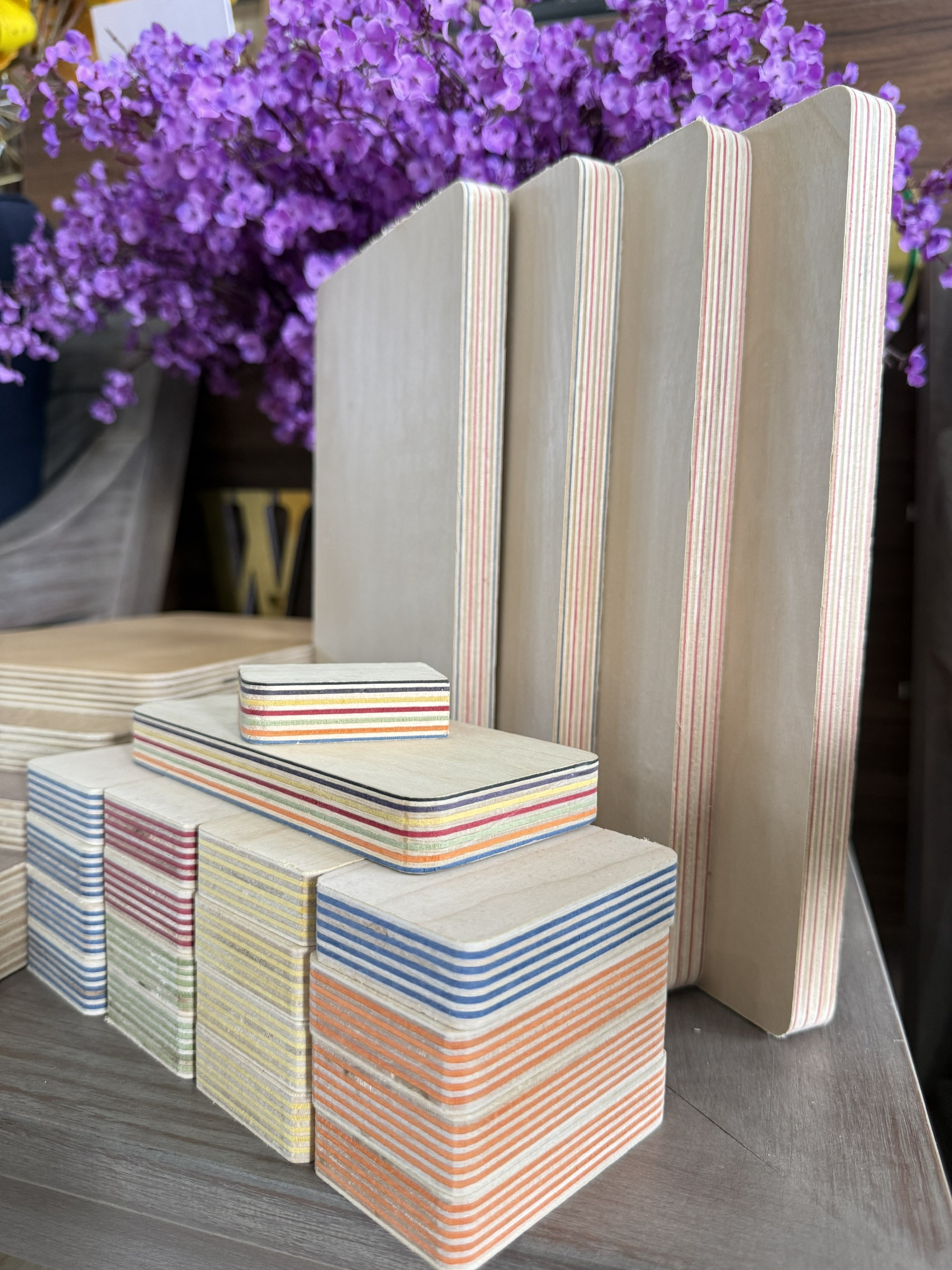
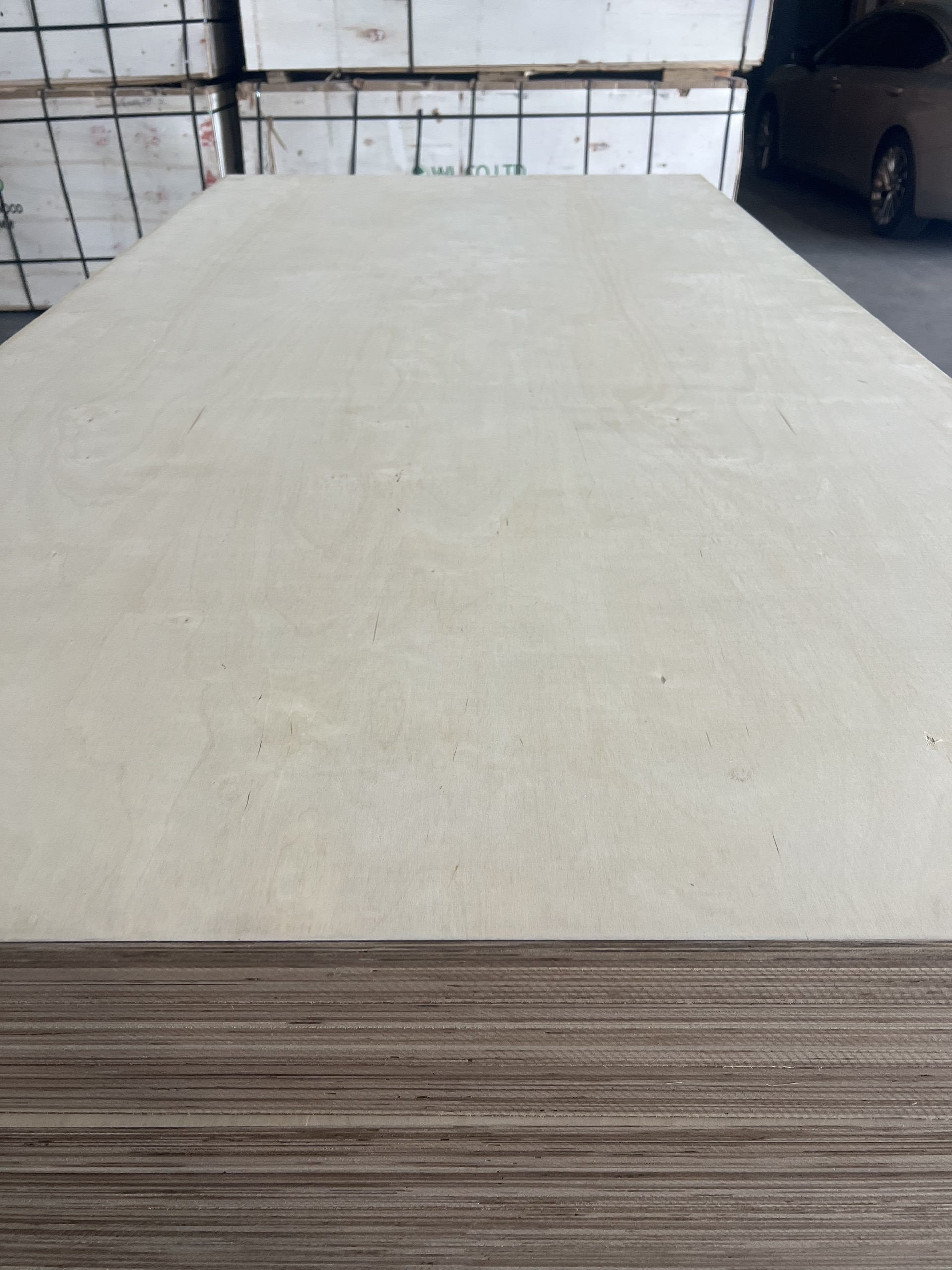
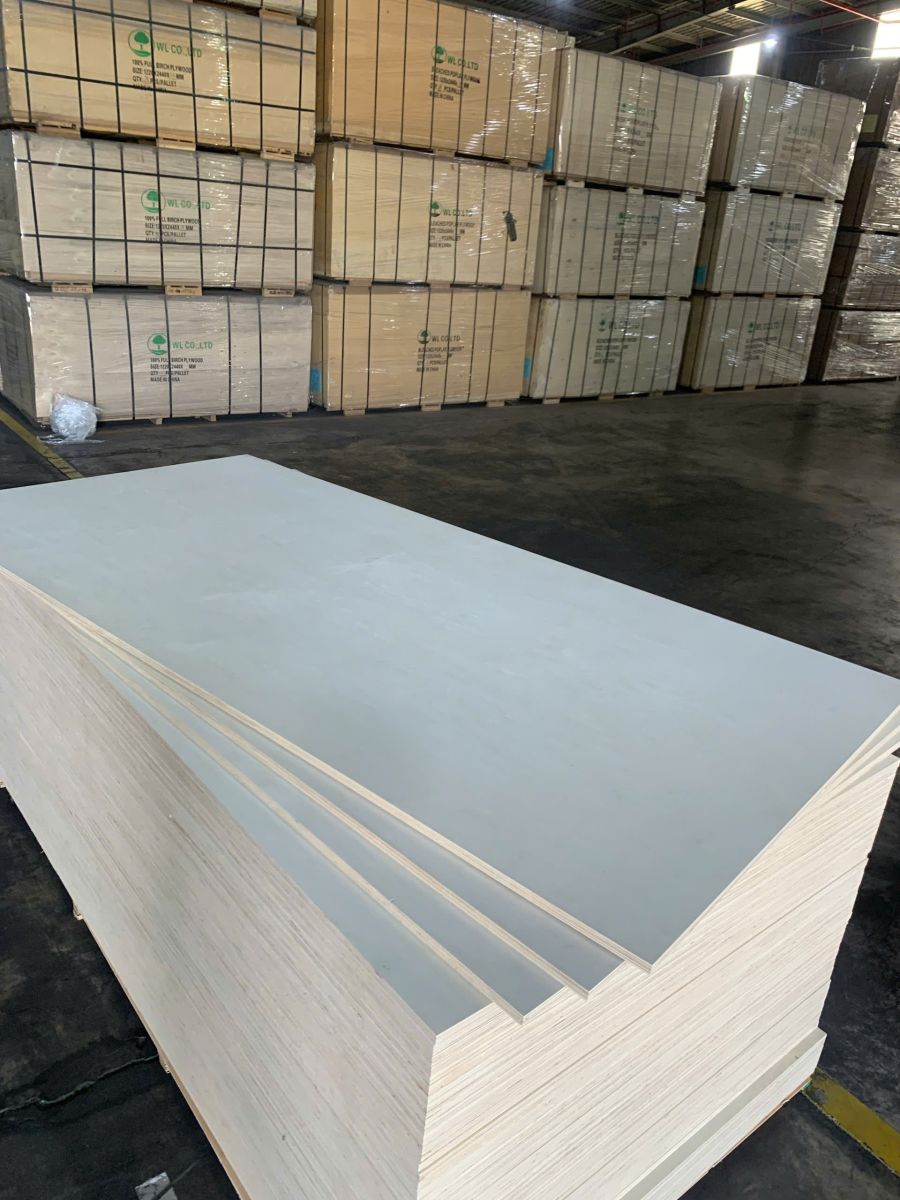
Plywood, also known as plywood, is a sheet material made up of many thin layers of wood (called veneer) laminated together. These veneer layers are glued so that the wood grain of the adjacent layers is perpendicular to each other. This process creates a sheet of material with much higher durability and dimensional stability than solid natural wood.
Basic structure of Plywood
The basic structure of plywood includes the following main components:
Veneer (Thin layer of wood): These are layers of natural wood sliced thinly from tree trunks. Common types of wood used to make veneer are birch wood, pine wood, eucalyptus wood, and many other types of wood.
Adhesive: The glue used to bond the veneer layers together. The glue can be phenol formaldehyde (PF) glue, urea formaldehyde (UF) glue, or Melamine glue and other more environmentally friendly glues.
Number of layers: The number of layers is usually an odd number (for example: 3, 5, 7, 9,11,13 layers) to ensure balance and stability for the board. The outer layer of veneer is often of higher quality to create a beautiful and durable surface.
Outstanding advantages of Plywood
High durability and bearing capacity
Plywood stands out with its incredible durability and bearing capacity, superior to many other materials. The veneer layers are glued perpendicular to each other, forming a solid interconnected network, helping to distribute impact forces evenly across the surface of the board. This helps plywood withstand large loads, resist warping, cracking, and deformation due to external forces.
Flexibility in design and application
Plywood is an extremely flexible material that can be cut, bent, and shaped easily to fit many different designs and sizes. Thanks to this characteristic, plywood is widely used in many fields, from housing construction, furniture production, to making handicraft products. The high customization ability of plywood allows designers and craftsmen to unleash their creativity, creating unique and impressive products.
Resistance to warping and shrinkage
One of the outstanding advantages of plywood compared to solid natural wood is its resistance to warping and shrinkage. Thanks to its multi-layer structure and perpendicular wood grain arrangement, plywood is less affected by changes in humidity and environmental temperature. This helps products made from plywood maintain a stable shape and size for a long time, ensuring aesthetics and durability for the project.
Popular types of Plywood today
Veneer-coated Plywood
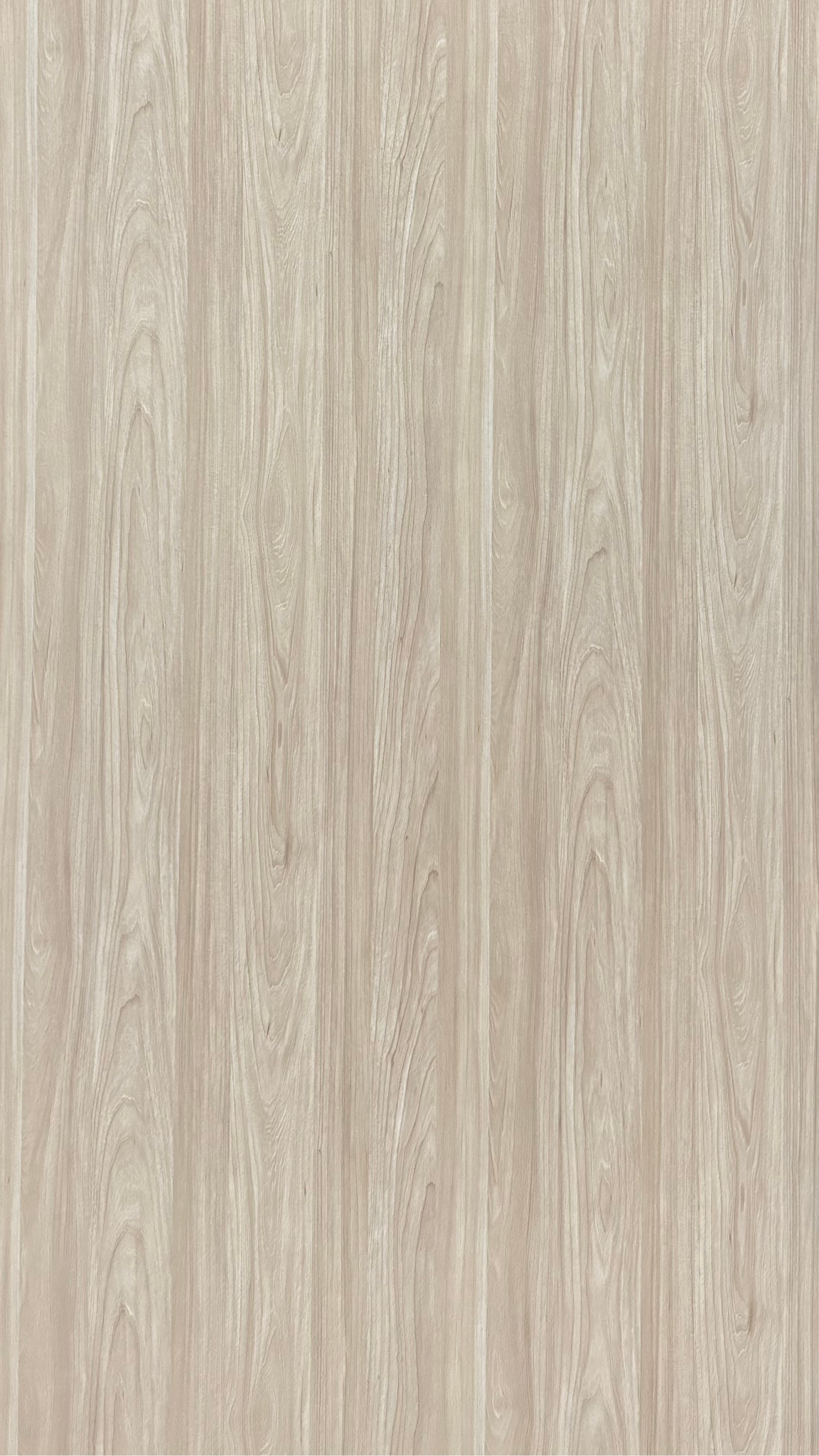
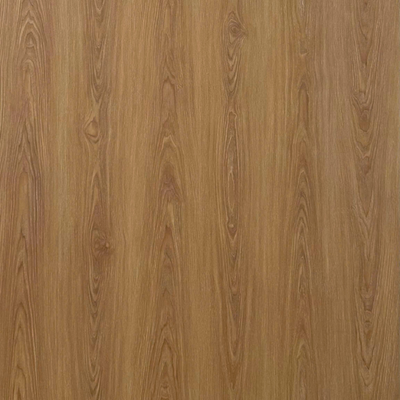
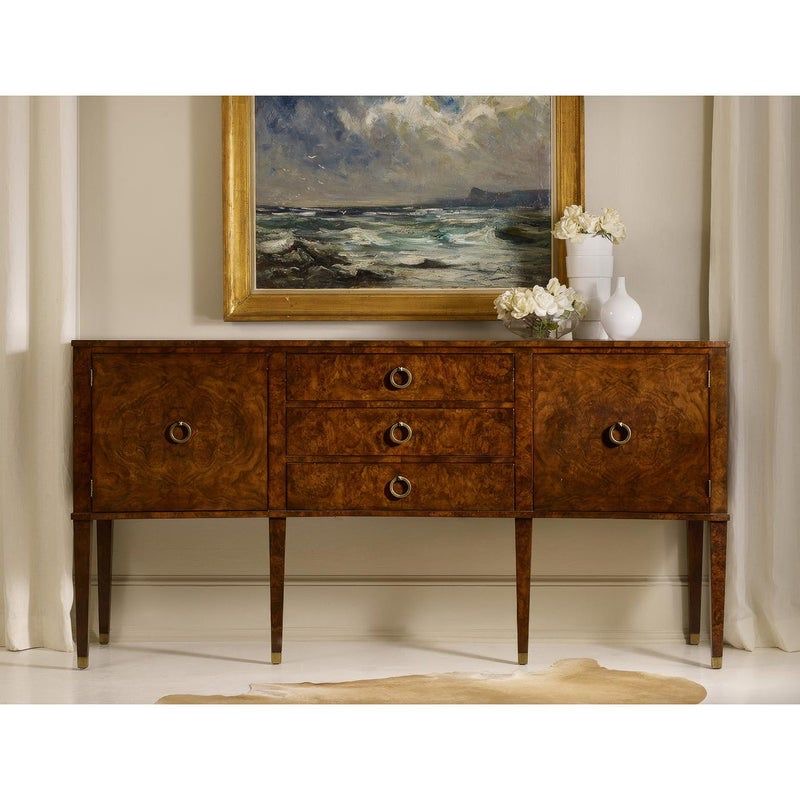
Veneer-coated plywood is a type of plywood covered with a thin layer of veneer (veneer) on the surface. This veneer layer is often made from precious woods such as walnut, oak, ash, or peach. Veneer-faced Plywood has a beautiful, luxurious surface, and resembles real natural wood. This type of plywood is often used in the production of high-end furniture, wall panels, and other interior decoration applications.
Water-resistant Plywood (Marine Plywood)
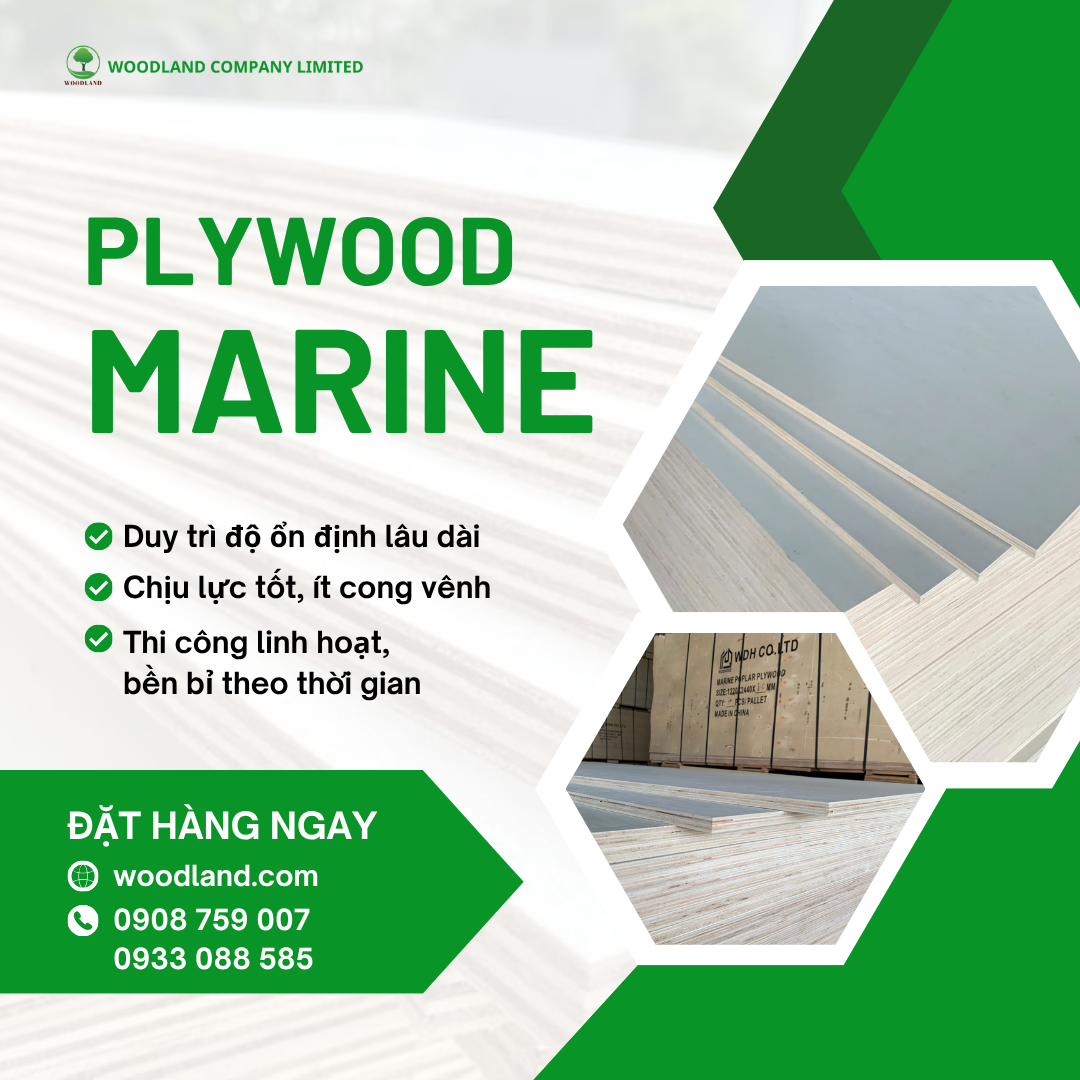
Water-resistant plywood, also known as Marine Plywood, is a type of plywood produced with special waterproof glue. The veneer layers in water-resistant plywood are also often treated to increase resistance to moisture and termites. This type of plywood is able to withstand wet environments, even being soaked in water for long periods of time without decay or rot. Marine Plywood is often used in shipbuilding, harbor construction, and other outdoor applications.
Wide application of Plywood in life
In construction and furniture
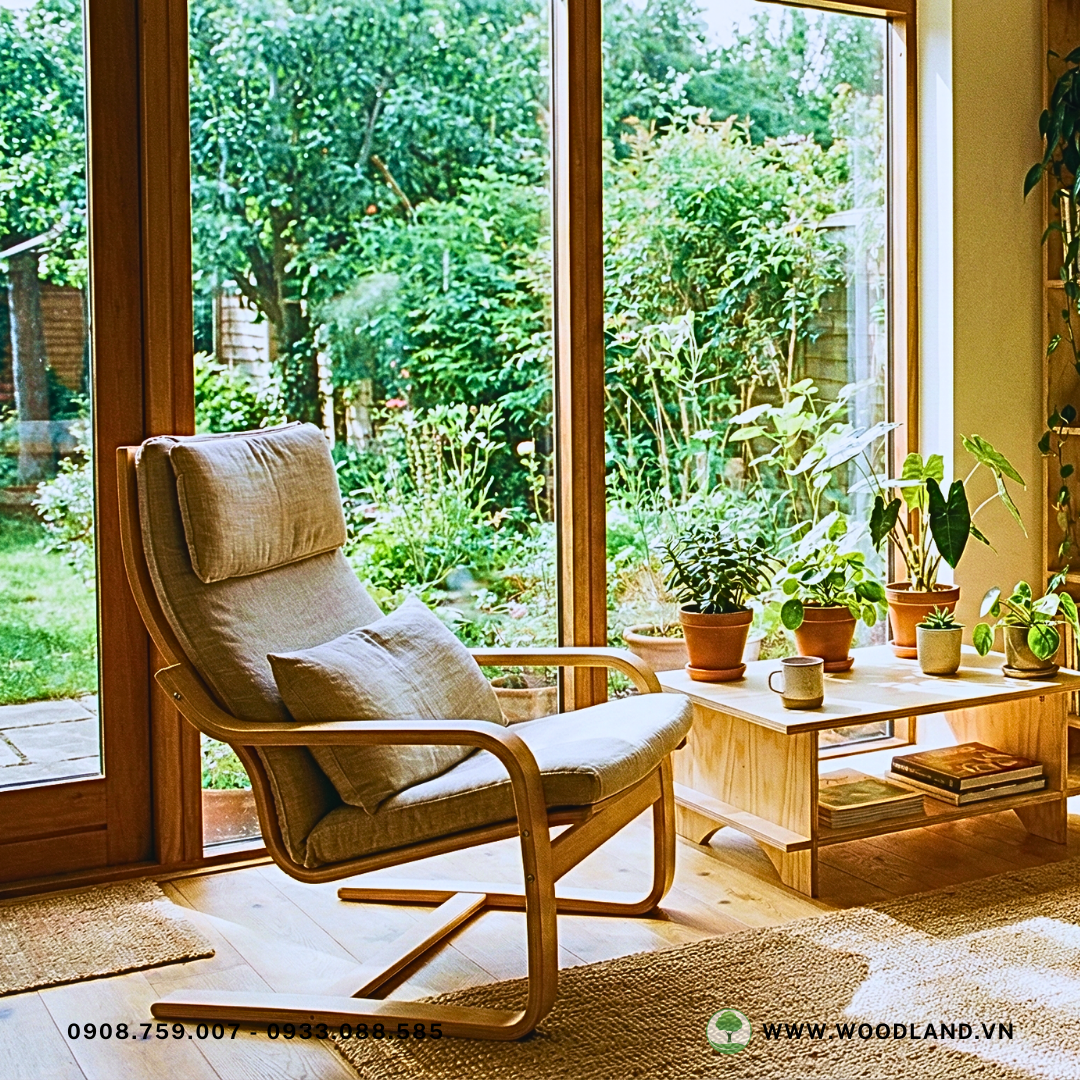
In the field of construction and furniture, plywood is widely used to make flooring, partitions, ceilings, doors, kitchen cabinets, tables and chairs, and many other types of furniture. The durability, bearing capacity, and high aesthetics of plywood make it an ideal choice for modern construction and interior decoration projects.
In the production of household and decorative items
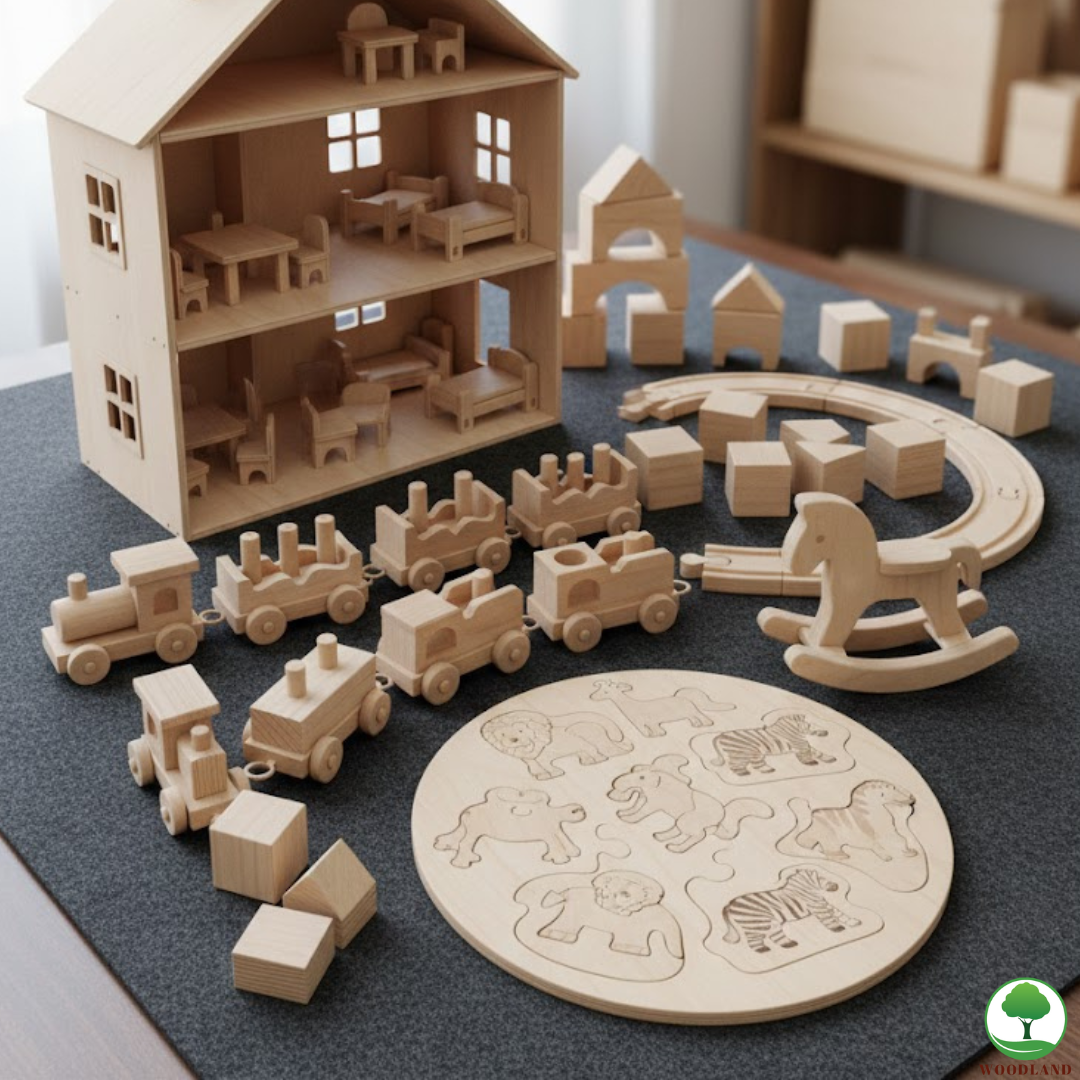
Plywood is also widely used in the production of household and decorative items such as bookshelves, racks, picture frames, children's toys, and handicraft products. The flexibility and ease of shaping of plywood allows manufacturers to create products with a variety of styles and sizes, meeting the needs of many customers.
In other industries
In addition to construction and furniture