Which industrial wood panels are suitable for kitchen cabinets? Plywood Melamine or MDF Melamine?
In-depth analysis of Plywood Melamine and MDF Melamine in kitchen cabinet construction. Compare moisture resistance, mechanical durability and health safety to make the most optimal material choice, ensuring a long life for the cooking space.
Written by
Woodland
News
Product News
Woodland
Product News
In-depth analysis of Plywood Melamine and MDF Melamine in kitchen cabinet construction. Compare moisture resistance, mechanical durability and health safety to make the most optimal material choice, ensuring long life for the cooking space.
Melamine - Which industrial wood panel is suitable for kitchen cabinets?
In modern interior design trends, kitchen cabinets are not only a place to cook but also the aesthetic center of the house. To ensure sustainability and safety in harsh environments like the kitchen, material selection is a key factor.
Industrial wood panels, especially Melamine-coated panels, are leading the market thanks to their economy and color diversity. However, between the two leading candidates, Plywood Melamine and MDF Melamine, which is the optimal choice for your kitchen cabinets? This article, from a professional perspective, will analyze in detail the advantages and disadvantages of each type of board to help you make the best investment decision.
1. Characteristics of the kitchen cabinet's usage environment and requirements for materials
Kitchen cabinets operate in the most complex environment of the house, requiring materials to overcome many physical and chemical challenges.
1.1. Moisture and moisture – the biggest risk factors for kitchen cabinets
This is the number one challenge facing kitchen cabinet materials. Moisture not only comes from the cooking process but also from the sink area and the floor:
Direct contact with water: Occurs often in the lower cabinet area, especially the sink compartment.
High air humidity: Hot steam from food and steam condenses in closed areas.
Consequences: Causes mold, causing the core of the wood board to swell and warp. Warping and peeling of Melamine coating.
1.2. Load and structure of hanging cabinets - lower cabinets
The kitchen cabinet system needs a solid structure to withstand heavy and continuous loads for many years:
Lower kitchen cabinets: Bear large static loads from stone surfaces, cooking equipment (induction cookers, ovens) and compression forces.
Hanging kitchen cabinets: Bear dynamic loads and require extremely high screw connection strength to hang dishes, heavy pots and pans.
1.3. Health safety requirements in the cooking space
Because kitchen cabinets are a place to store and process food, materials must ensure absolute safety, avoiding the emission of toxic substances:
The adhesive used in industrial wood boards needs to meet low formaldehyde emission standards (E1, E0 or CARB P2).
Materials do not create an environment for mold and bacteria to grow.
1.4. Long-term durability and maintenance costs
Kitchen cabinets are a large and fixed investment item. Customers expect the lifespan of kitchen cabinets to reach 10 to 15 years without major maintenance or replacement. The more durable the material, the lower the risks and costs of future repairs.
2. Overview of Plywood Melamine used in kitchen cabinets
Plywood Melamine (Melamine-Coated Plywood) is a material highly appreciated for its mechanical durability and structural stability, especially suitable for areas requiring heavy load capacity and moisture resistance.
2.1. Structure of plywood core and melamine coating
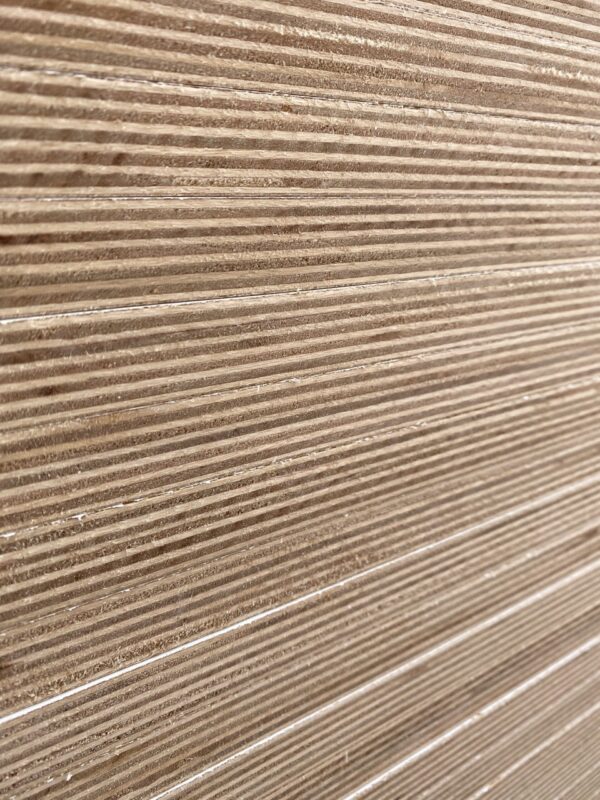
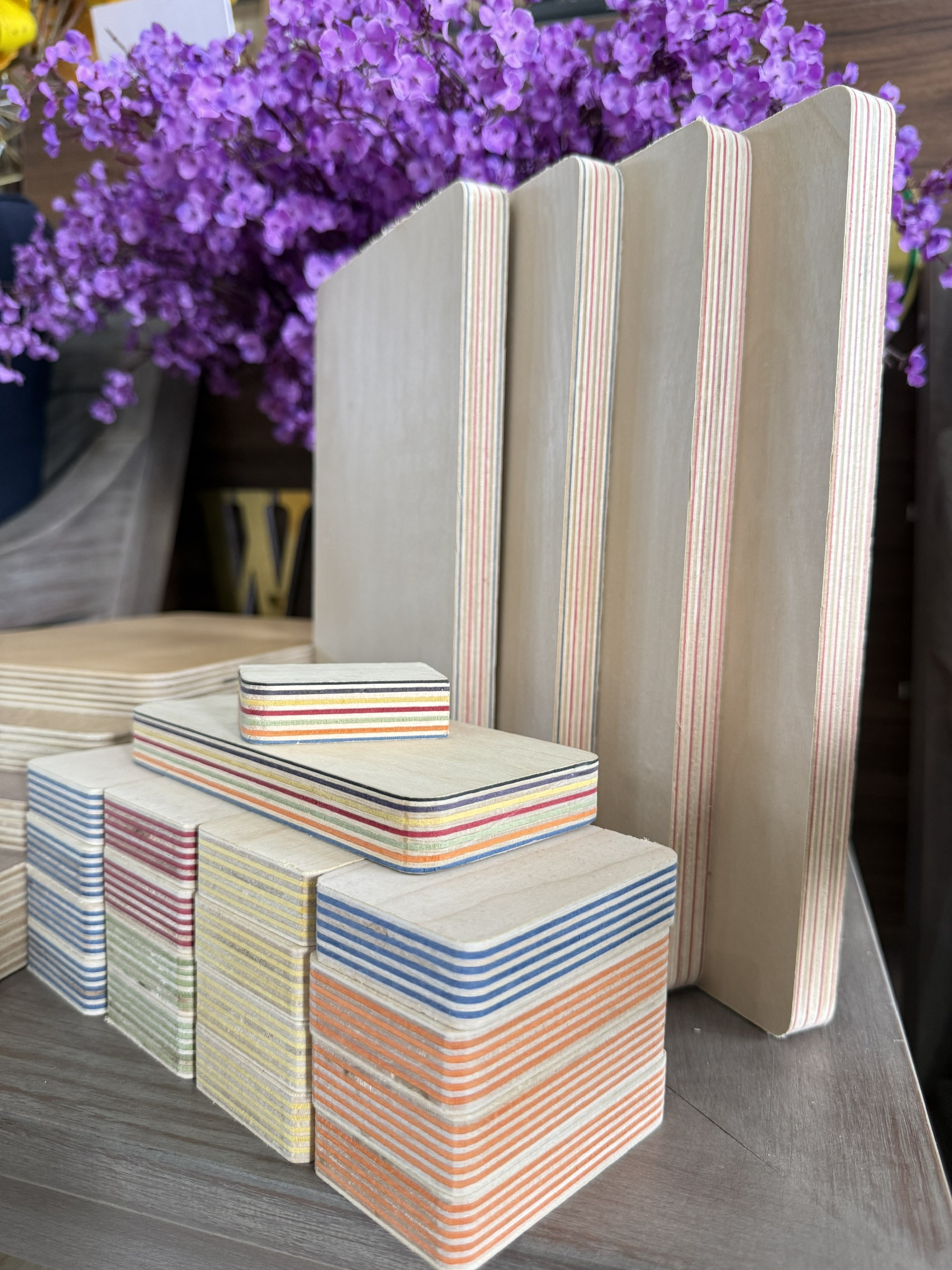
Plywood core: Made up of many layers of thin wooden boards (veneer) stacked on top of each other, each layer has wood grain perpendicular to the adjacent layer, then pressed under high temperature and pressure.
Melamine coating: Synthetic plastic layer protects the surface, is scratch-resistant, moisture-proof and increases aesthetics with many colors different wood colors/grains.
2.2. Moisture resistance and structural stability
Plywood's interwoven multi-layer structure provides outstanding stability:
Resistant to layer separation and deformation: Perpendicular wood grain helps disperse force and minimize expansion or contraction when temperature and humidity change.
Moisture resistance: When using glue that can withstand water and moisture, Plywood is waterproof. and significantly better anti-swelling than fiberboards.
2.3. Plywood Melamine's screw-driving and load-bearing ability
This is the biggest advantage of Plywood in kitchen cabinet construction:
High screw holding force: Because the Plywood core is essentially horizontally pressed natural wood, it holds screws and hinges tightly, helping the hanging cabinet system and load-bearing parts (slide rails) have long-term connection strength.
Good load-bearing: Plywood has the ability to hold screws and bear loads. High bending and shear resistance, ideal for heavy-duty cabinets.
2.4. Health safety and commonly used glue standards
To ensure safety, Plywood used in kitchen cabinets needs to use glue that meets E1/CARB P2 standards, minimizing formaldehyde emissions.
Ke